

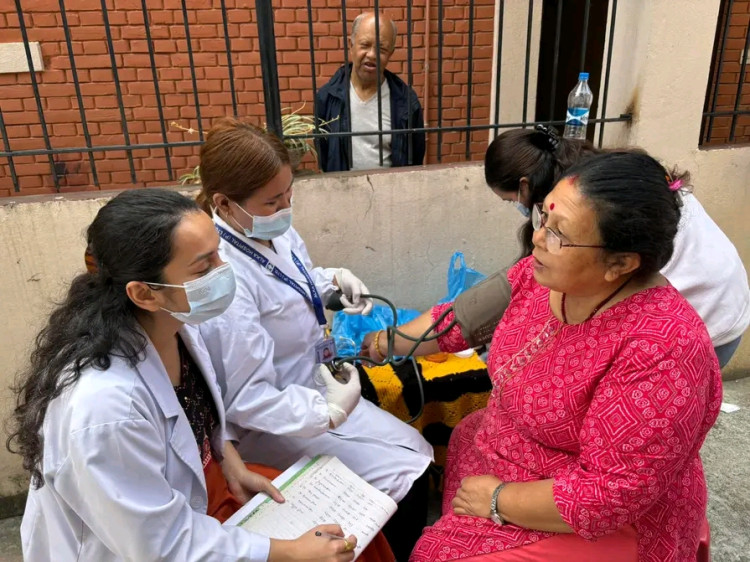
The PCL in Nursing (Staff Nurse) is a prestigious three-year CTEVT program preparing students for essential roles in healthcare. The curriculum blends foundational sciences with specialized training in midwifery, pediatrics, geriatric and psychiatric care.
Admission is now merit-based, determined solely by SEE GPA. Graduates become competent, compassionate professionals eligible for government service as Staff Nurses and are well-positioned for advanced nursing degrees in Nepal and abroad.
The Proficiency Certificate Level (PCL) in Nursing (Staff-Nurse) program, a cornerstone of nursing education in Nepal, was initiated by the Council for Technical Education and Vocational Training (CTEVT) in 1999 AD (2056 BS). Recognizing the importance of career progression for its graduates, CTEVT initially adopted the curriculum of Tribhuvan University (TU), Institute of Medicine (IOM), facilitating vertical and horizontal mobility within the nursing profession.
In response to evolving health needs and the directives of the Nepalese government's health policy, CTEVT undertook a significant curriculum revision in 2013. This updated curriculum reflects the dynamic landscape of healthcare and underscores PCL Nursing's vital role as a prominent and highly sought-after discipline. The nursing profession globally contributes significantly to comprehensive health development, simultaneously generating substantial employment opportunities, both salaried and self-employed, across public and private sectors.
The core objective of the PCL Nursing curriculum is to cultivate a cadre of skilled middle-level technical nursing professionals. These graduates are equipped with essential knowledge and practical skills to address the country's healthcare demands, thereby contributing directly to Nepal's national economic development. The program's design ensures that graduates are prepared to meet individual patient needs as well as broader national healthcare priorities.
Aligning with the Nepal Government's "Health for All beyond the Year 2000 A.D" policy, which emphasizes a primary healthcare approach, CTEVT was mandated to produce a skilled middle-level healthcare workforce through its own institutions and affiliated training centers.
The 2013 curriculum development process incorporated crucial updates reflecting contemporary healthcare challenges and government endorsement of emerging health concepts. Notably, recognizing PCL nursing graduates as primary service providers, the Department of Health advocated for the inclusion of gerontology care. Furthermore, the curriculum expanded its focus on psychiatric nursing, increasing both theoretical content and clinical hours. A new subject, "Basic Science Applied to Nursing," was introduced, encompassing Biochemistry (including Microbiology, Parasitology, and Virology) and Pharmacology. Portions of oncology nursing were also integrated. The program emphasizes a balanced approach, with robust theoretical instruction complemented by extensive practical sessions.
The PCL Nursing curriculum is designed to align with the job performance requirements of Staff Nurses across various levels of Nepal's healthcare system. It aims to instill the requisite knowledge, skills, and professional attitudes in graduates, enabling them to deliver competent and compassionate nursing care. The three-year program is structured progressively: the first year concentrates on foundational nursing practices within hospital and community settings; the second year delves into preventive, promotive, and therapeutic nursing care for adults, the elderly, and individuals with mental health conditions; and the third year covers specialized areas such as pediatric nursing, midwifery, gynecology, and essential leadership and management skills.
Aims
The program aims to produce a middle level nursing work force who is independent and competent to assume the responsibility to carry out the function of preventive, primitive, curative, rehabilitative and holistic care of an individual/group at hospital and in community settings.
Program Objectives
Upon completion of the program the graduate will be able to:
Core Required Courses for all majors:
| S. N. | Course Number | Name of Subjects | Theory Hours | Practical Hours |
|---|---|---|---|---|
| 1 | 501 | Fundamental of Nursing I (T) | 160 | 630 |
| 2 | 502 | Fundamental of Nursing I (P) | ||
| 3 | 503 | Community Health Nursing I (T) | 120 | |
| 4 | 504 | Community Health Nursing I (P) | 210 | |
| 5 | 505 | Anatomy and Physiology | 100 | |
| 6 | 506 | Basic Science Applied to Nursing | 100 | |
| Pharmacology | (40) | |||
| Biochemistry | (30) | |||
| Microbiology | (30) | |||
| 7 | 507 | English | 120 | |
| 8 | 521 | Nepali | 120 | |
| Total | 720 | 840 |
| S. N. | Course Number | Name of Subjects | Theory Hours | Practical Hours |
|---|---|---|---|---|
| 1 | 508 | Medical and Surgical I (T) | 150 | |
| 2 | 509 | Medical and Surgical I (P) | 446 | |
| 3 | 510 | Medical and Surgical II (T) | 50 | |
| 4 | 511 | Medical and Surgical II (P) | 175 | |
| 5 | 514 | Geriatric Nursing (T) | 50 | 70 |
| 6 | 515 | Mental health and behaviors nursing (T) | 100 | |
| (T) | (50) | |||
| Behavior health | (50) | |||
| Mental health | ||||
| 7 | 519 | Mental health and behaviors nursing (P) | 70 | |
| 8 | 520 | Community Health Nursing II (T) | 100 | |
| 9 | 517 | Community Health Nursing II (P) | 50 | 240 |
| 10 | 518 | Social science | ||
| Total | 500 | 1001 |
| S. N. | Course Number | Name of Subjects | Theory Hours | Practical Hours |
|---|---|---|---|---|
| 1 | 524 | Midwifery Nursing I (T) | 100 | 150 |
| 2 | 525 | Midwifery Nursing I (P) | ||
| 3 | 526 | Midwifery Nursing II (T) | 100 | 170 |
| 4 | 527 | Midwifery Nursing II (P) | 100 | |
| 5 | 528 | Midwifery Nursing III (T) | 150 | |
| 6 | 529 | Midwifery Nursing III (P) | ||
| 7 | 530 | Gynecology Nursing (T) | 50 | 70 |
| 8 | 531 | Gynecology Nursing (P) | ||
| 9 | 512 | Child health nursing (T) | 100 | |
| 10 | 513 | Child health nursing (P) | 140 | |
| 11 | 522 | Leadership and Management (T) | 100 | |
| 12 | 523 | Leadership and Management (P) | 342 | |
| Total | 550 | 1022 |
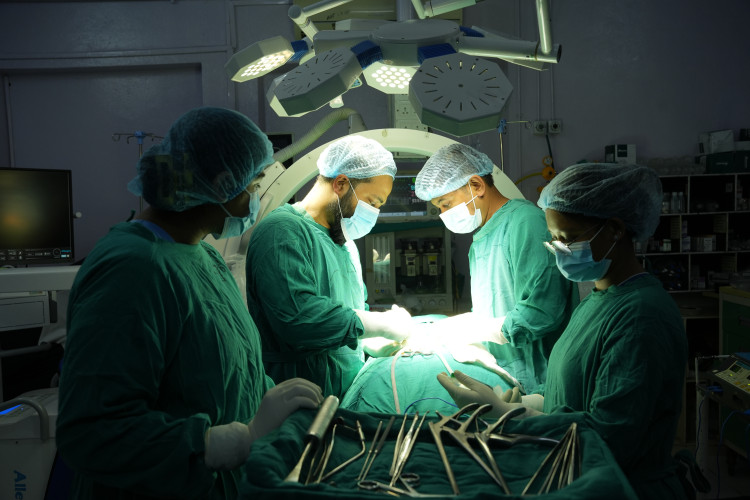
After completing PCL Nursing, graduates can work in various healthcare sectors in Nepal:
🏥 1. Hospitals (Government & Private)
Work Areas:
🏥 2. Health Posts & Primary Healthcare Centers
📌 Focus on basic healthcare, vaccination, and maternal care
🌍 3. NGOs & INGOs
Work includes:
🏫 4. Educational & Institutional Health Services
📈 Growing demand in urban areas
🌏 5. Foreign Employment
📌 Nursing has very strong international demand
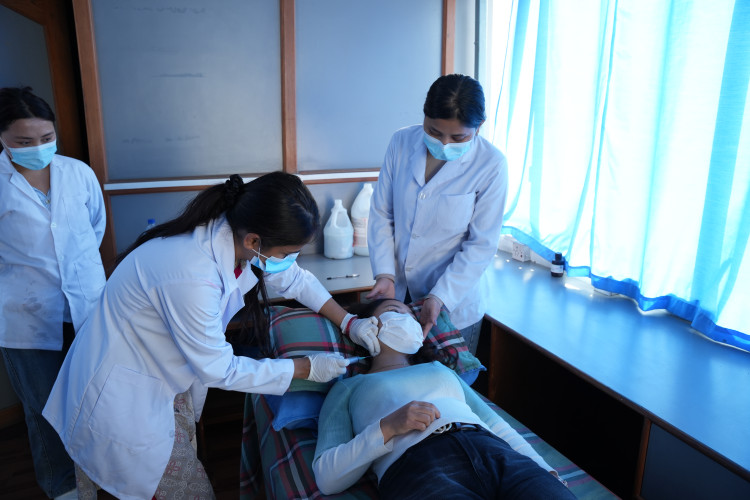
To become a successful nurse, students must develop the following skills:
🩺 1. Clinical Nursing Skills
👶 2. Maternal & Child Health Skills
🧠 3. Critical Thinking & Emergency Care
🧼 4. Infection Control & Safety
🤝 5. Communication & Soft Skills
⏱️ 6. Time Management & Work Discipline
📚 7. Continuous Learning
PCL Nursing offers strong and stable career growth in Nepal:
🩺 1. Entry-Level Roles
🏥 2. Mid-Level Roles
🎓 3. Higher Education Path
🧑⚕️ 4. Advanced Career Roles
🌍 5. International Career Growth